




QualityConnect

  • Workshops + practical sessions
  • Tools, patterns & checklists you can reuse
  • Quality beyond testing, across the SDLC

QualityConnect Community Icon

Community

300+ expected attendees

QualityConnect Sessions Icon

Sessions

12+ keynotes, demos, showcases

QualityConnect Masterclasses Icon

Masterclasses

2 days of quality content

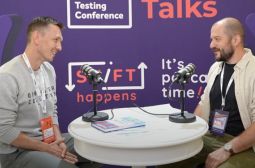
Built by organizers behind community events like Romanian Testing Conference, xTestathon and Shift Happens.

Target audience

  • Developers, QA/Test, SRE/DevOps
  • Tech Leads & Engineering Managers
  • Product / Delivery roles focused on outcomes

You will leave with

  • Reusable practices you can apply immediately
  • Templates/checklists you can reuse with your team
  • A clearer approach to quality across the SDLC

Event Schedule

Whether you're a rising junior developer or a seasoned tech lead,
QualityConnect gives you the tools, access, and network to become the kind of professional the future needs:

Intro
Room: TBD
Keynote

Why is quality software not the norm, why are we here discussing the topic and why is achieving it SO hard?

A major factor is the breadth of what contributes to delivering a quality product - no quality is not testing and we'll debunk that along the way.

The problems start the day the company or initiative does. The people who are hired, the technical choices, the processes that are set up and even the communications culture can start undermining the chance of achieving quality with shocking efficiency.
This session will delve into these topics drawing from personal experience to let others learn and laugh at the presenter's mistakes.

Garry will ultimately seek to answer the question - to achieve quality software do you need build a jigsaw, follow a recipe or evolve an organism?

Room: TBD
Talk

In this talk, Tudor will explore how technical debt resulting from the absence or reduction of testing efforts leads to substantial ‘bills to pay’ in the operations area of complex systems. Tudor will also connect this with the startup world and highlight the practical lessons that can be reasonably and successfully transferred. Every compromise comes with a cost, and quality is no exception.

  • What the operational area of complex systems looks like
  • How testing is perceived from the operational side
  • How and why technical debt accumulates
  • Who ends up paying the bill — and especially how
  • Which testing‑related lessons are worth transferring from the corporate world to startups
  • Why we never seem to learn, even though the same things happen every time (including a bit of mindset discussion)

For each of the points above, Tudor will bring practical, real‑life examples, as well as insights from my experience in large and complex projects.

Room: TBD
Talk

AI may be confident, but it’s not always correct and that’s where testers shine. This talk shows how testers use critical thinking, curiosity, and validation to catch subtle AI mistakes that automation alone can’t see, turning blind trust into informed teamwork. That confidence ≠ correctness. AI can look polished while being wrong, so testers need to question its output, verify assumptions, and guide their teams to work with AI responsibly, not blindly trust it. This session is story-driven, visual, and hands-on. It combines live AI examples, short real-world failures, and clear mental models to help people recognize bias, false fluency, and automation traps. It’s built for curious tech professionals who want to use AI but also understand it.

Room: TBD
Talk

Delivering great software has never been about just an elegant solution, test coverage, or the technology stack we pick. It's about its impact on real people and their lives, and about real businesses. Making sure our solutions do exactly that, get real people to their desired outcomes, is what we call having a product mindset.
In this talk, Claudia and Raluca will introduce the 3 Lenses Framework, a practical mental model for consciously shifting between Solution, Problem and Outcome. The aim is to start (or keep) thinking about problems and outcomes before jumping to implementation.
Why does it matter now? IT Professionals who understand product context make better micro-decisions every day. They become trusted partners rather than execution resources. And we believe that that distinction is what makes us not lose our jobs to AI.

Room: TBD
Talk

During this talk, Vlad will show how to replace subjective “looks good to me" reviews with an evaluation system you can actually trust. The talk covers what to measure, how to measure it, and how to keep it working as prompts, models, retrieval, and tooling change over time.
You'll learn when deterministic evaluations (unit tests, schema checks, tool-call validation) are enough, when you need non-deterministic evaluations (LLM-as-a-judge, rubric-based scoring), and how to design these so they stay aligned with real user expectations. A key theme is the role of human experts: they define what “good” means, perform error analysis to identify the main failure modes, and calibrate evaluators so teams can move fast without drifting into guesswork.
All of this matters as LLM features are becoming a core product surface area, while behaving like probabilistic software where small changes can create silent regressions. An evaluation system turns model behavior into something you can engineer: faster iteration, safer releases, clearer quality standards across teams, and production feedback loops that detect drift and keep reliability improving.

Room: TBD
Talk

Public institutions publish massive amounts of financial data about how public money is collected and spent. In theory, this data exists to ensure transparency. In practice, it is fragmented, technical, hard to access, and almost impossible for ordinary citizens to interpret.


This creates a dangerous gap: information is public, but understanding is private—limited to specialists, insiders, or those with the time and skills to process raw data. As a result, public spending often escapes meaningful scrutiny, civic participation weakens, and trust erodes.


In this talk, I'll share why we built Transparenta.eu, what product choices help people explore budgets quickly and how the "Budget Academy" component supports budget literacy. Then we'll go under the hood: where public finance data comes from, how we connect to government sources, and how we keep data trustworthy despite inconsistent formats and limited resources.


I'll close with real-world feedback from citizens and mayors, lessons learned, and concrete ways the community can contribute: code, data, validation, documentation, and local outreach.

Room: TBD
Talk

Teams rarely fail because of one big mistake. More often, problems emerge from a series of reasonable decisions made under pressure. Same patterns repeat across teams and organizations not because people lack skill, but because when deadlines tighten, the decision is to optimize locally instead of stepping back to see the broader system dynamics at play.


In this talk, Laurentiu introduces the practical building blocks of systems thinking: stocks, flows, feedback loops, and delays to expose three common archetypes that quietly shape how tech teams respond to pressure:

  • Shifting the Burden — quick fixes that weaken long-term capability
  • Drifting Goals — the gradual erosion of quality standards
  • Tragedy of the Commons — local optimization that damages shared
  • systems

Through real-world examples, participants will learn how to recognize these patterns in their own teams and conversations.


Attendees will leave with:
  • A visual language for reading system behavior
  • Three archetypes they’ll start noticing immediately
  • One practical reflection question to bring back to their team

Once you see these patterns, you can’t unsee them and that changes how you measure, decide, and protect what truly matters.

Room: TBD
Full-day workshop

This workshop is a practical, hands-on introduction to web application security for developers and testers. Participants learn how real-world attacks work by exploiting common vulnerabilities in an intentionally vulnerable web application and then mapping them to secure coding and testing practices. The session combines short theory blocks with live demos and interactive challenges using OWASP Juice Shop. Attendees will explore the OWASP Top 10 risks, perform attacks such as injection, broken access control, and cross-site scripting, and understand how these issues appear in real projects and test scenarios. Developers will learn how to write more secure code, while testers will learn how to identify, reproduce, and report security vulnerabilities effectively. By the end of the workshop, participants will understand the attacker mindset and how to integrate security into development and testing workflows.

Key takeaways:

  • Learn How Real Web Vulnerabilities Are Exploited Participants experience real attacks like XSS, SQL Injection, Authentication Failures, and Broken Access Control, understanding how attackers find and exploit weaknesses.
  • Learn some of the OWASP Top 10 Through Hands-On Challenges The workshop maps practical exploits directly to the OWASP Top 10, helping participants recognize the most critical web security risks in modern applications.
  • Develop an Attacker Mindset for Better Testing and Coding Both developers and testers learn to think like attackers, improving threat modeling, test coverage, and defensive design.
  • Apply Secure Coding and Security Testing Techniques Attendees learn prevention techniques (validation, authorization checks, secure headers) and how testers can verify fixes and prevent regressions.

Target audience: Web developers, frontend/backend engineers, QA engineers, manual and automation testers, and security beginners.

Room: TBD
Full-day workshop

Product Mindset for Developers is a full-day workshop for software engineers who've built too many features that nobody ends up using, or that get reworked halfway through the sprint, when requirements suddenly change.
We'll work through a real case together, from understanding the actual problem to building a prototype that tests our assumptions.
The workshop introduces three lenses that matter before you even start writing the first line of code: what problem are we solving, what outcome are we aiming for and what solution makes sense given both. You won't become a product manager, but you'll get better at:

  • spotting bad requirements
  • asking the right questions earlier
  • collaborating with the people who write the specs

The goal is a practical framework you can use starting Monday, and maybe fewer moments where you look at your work six months later and wonder why you built it.

Room: TBD
Full-day workshop

AI is accelerating software delivery to unprecedented speeds, but quality processes in many companies remain stuck as bottlenecks. To turn quality into a competitive advantage, organizations must treat it as a critical business capability woven through your entire value stream, not a final checkpoint. Quality is evolving from being 'the QA team's' or 'our team's QA person's' responsibility to being everyone's responsibility, supported by specialists. Just as DevOps didn't eliminate operations work or operators (it changed who does it and how), this evolution doesn't eliminate quality work or QA specialists. It changes the structure: moving from QA as a handoff destination and bottleneck (whether to a separate team or designated individual) to QA expertise embedded in, enabling, or providing platforms for stream-aligned teams. We will use Team Topologies patterns alongside systems thinking approaches to map quality as a capability that flows as a band weaving through your entire value stream (not just one pit-stop on the SDLC). Together we will identify constraints, flow bottlenecks, and waste. We will explore where quality becomes a bottleneck versus where it flows naturally, and design team structures and interactions that enable fast flow without sacrificing outcomes. Organizations that successfully make this shift gain significant competitive advantages: faster time to market, reduced risk, and quality as a strategic differentiator rather than a cost center. Through hands-on mapping exercises, case study analysis, and collaborative problem-solving, you will explore when dedicated quality teams enable fast flow and quality versus when they create bottlenecks. For example, what does a platform team providing quality infrastructure look like? When does an enabling team coaching quality practices make sense? We will also work through practical change management tools to help you build the business case and frame the transformation for different stakeholders. You will leave with concrete approaches to navigate the organizational shifts required to move toward quality as a system. All materials are designed for immediate use back at your organization: templates you can adapt, frameworks you can apply, and conversation guides you can use with your stakeholders.

Key Takeaways:

  • Map quality as a system capability across your teams using Team Topologies interaction patterns, identifying bottlenecks, cognitive load issues, and opportunities for quality to flow through your value stream
  • Design team structures and ownership boundaries that enable fast delivery and sustainable quality, including when platform or enabling teams for quality make strategic sense and when they create anti-patterns
  • Frame and communicate organizational change toward quality as a system using practical change management tools, addressing the "what is the role of QA?" question and navigating the full organizational transformation including structure, roles, and incentives

Audience Level:

  • Senior / Leadership (Tech Leads, Engineering Managers)
  • Developers, QA/Test Leaders
  • Product Leaders
Room: TBD
Full-day workshop

Building microservices is no longer about writing more code — it’s about making the right design decisions and recognizing patterns that scale and patterns that break. In this full-day, hands-on workshop, participants will focus on mastering the core concepts of microservices architecture and code quality, while using AI to handle much of the implementation work. The emphasis is on understanding why a design works, when it should change, and how to guide AI through clear problem statements, constraints, and tests. Rather than coding everything manually, participants will practice: defining architectural boundaries, identifying quality risks early, expressing intent through tests and acceptance criteria, and using AI to generate and evolve code that follows those rules. Through guided exercises and realistic scenarios, we’ll explore how well-defined testing and problem-solving drive better outcomes than tool-driven coding and how AI becomes effective only when engineering thinking is clear.

Key Takeaways

  • Recognize architectural patterns that support change — and anti-patterns that create friction
  • Design microservices by reasoning about behavior, boundaries, and quality attributes, not frameworks
  • Use tests and constraints to drive AI-generated code in a controlled way
  • Translate business and technical problems into clear problem statements AI can work with
  • Detect early signs of design erosion and technical debt
  • Apply pragmatic techniques to evolve and refactor existing services safely

Room: TBD
Full-day workshop

Many teams proudly report high test coverage and still struggle with outages, late defect discovery, and low confidence in releases. At the same time, AI tools and agentic LLMs are transforming how we generate tests and analyze code, but adding AI to a weak validation strategy only accelerates failure. This session explores how to improve the development and testing experience by shifting from coverage-driven testing to value-driven validation. The focus is not on adding more tests, but on designing effective quality practices that directly support business outcomes. Using delivery signals such as DORA metrics of deployment frequency, change failure rate, lead time to change, we’ll identify where current validation fails to protect real user and revenue-critical flows. We’ll then show how to rebalance validation across technology-facing checks and business-facing scenarios, and how AI can support risk analysis, targeted test generation, and faster feedback loops. The outcome is an Engineering flow aligned with business impact and actionable decision-making Attendees will leave with a practical approach to use AI responsibly, reduce change failures, and create a development flow centered on value, clarity, and effective action.

Key Takeaways

  • Identify why high test coverage does not translate into release confidence, using real delivery signals such as risk assessment and fast feedback loops
  • Design a balanced quality strategy that combines technology-facing checks (unit, integration, contract tests) with business-facing validations focused on critical user and revenue flows
  • Define a Minimal Validation Set with clear go/no-go criteria that supports safe, predictable releases
  • Improve feedback loops across environments to catch the right problems earlier without slowing delivery
  • Measure quality improvement in business-relevant terms, not vanity metrics, using a small set of indicators reviewed continuously and on-demand

Room: TBD

Conference chairperson

This year's theme, We Are Tomorrow, is about how we build and who we build with. It's about designing for quality not just in code, but in communication, in collaboration, and in the systems we create together.

Maria Kedemo

Specialist generalist ☆ Chairperson

Confirmed Speakers

Real work, real stories, real skills you can apply. Practical know-how from those who've done it.

tudor stoica

Tudor Stoica

CEO ☆ Podcaster ☆ Author

christine pinto's

Christine Pinto

Tester ☆ Tech founder

Garry Turkington

Tech leadership ☆ Platform Engineering

claudia mascas's

Claudia Mascas

UX Consultant ☆ Trainer

Brian Graham

Founder ☆ Team Topologies Advocate
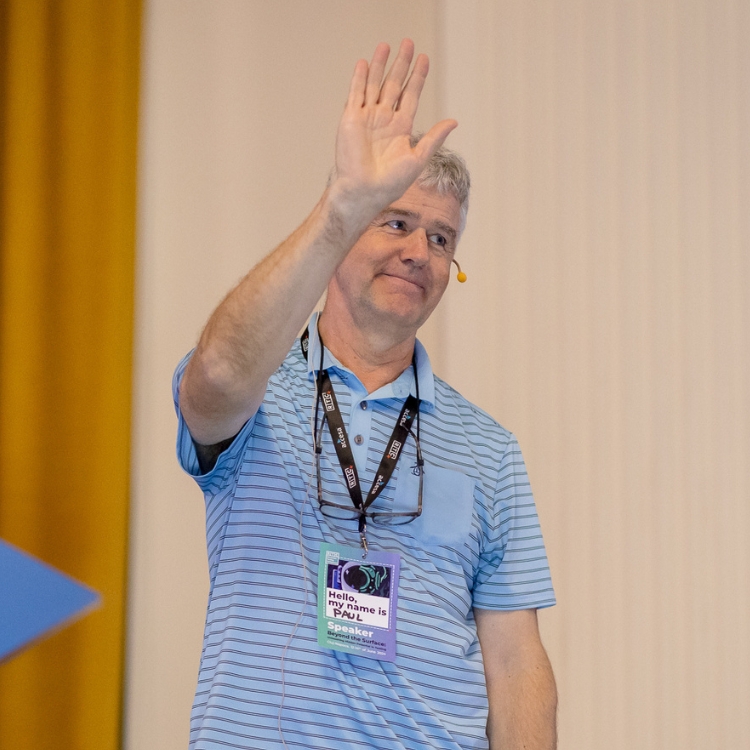
Paul Holland

Director Test Engineering

Dana-Maria Nicolae

Software Developer

Vlad Iliescu

CTO at ZenAIos ☆ Microsoft MVP on AI

Raluca Piteiu-Apostol

Product Management Consultant & Trainer

Bogdan Mihai Nicolae

Software Developer ☆ Educator

Claudiu Bogdan

Claudiu Bogdan

Tech Founder ☆ Software Engineer

Laurentiu Iarosevici

Laurentiu Iarosevici

Systems Architect

FAQ

Quick answers before you register.

Yes. You can register and request invoice details during the process (or contact us at social@qualityconnect.ro).
Access to both days, all keynotes & tracks, one workshop/tutorial, coffee breaks and lunch, networking & Partner Village.
Yes — ticket transfers are allowed. If you need help, email social@qualityconnect.ro.
All sessions, announcements and materials are delivered in English.

"Quality in IT is not a checklist, it is a mindset."

Romania QualityConnect Conference Illustration

We accelerate the professional growth of IT specialists by creating a community where practical quality experience meets future-oriented collaboration.

What sets us apart

  • We focus on actionable learnings for your team - by practitioners for practitioners
  • We provide a public forum for developers, testers, architects and business leaders
  • We promote continuous learning - education starts before and continues after the event
  • We create an authentic technical environment – a true talent marketplace for any business

News

The latest updates, announcements, and insights straight from the team - so you're always in the loop.

Conference Pass Pre-Sale

Pre-sale is live!
Secure your spot at Romania QualityConnect 2026. Be among the first to get your pass at special early bird pricing. Join now the community elevating quality in software development.

Nov 18, 2025

Call for Sessions is Open

Have real-world experience, valuable insights, or lessons learned the hard way? We want to hear from you! Romania QualityConnect is looking for speakers who can inspire a community of forward-thinking tech professionals.

Sept 9, 2025

Call for Partnerships

Are you looking to make an impact in Romania's tech community? Partner with Romania QualityConnect and showcase your brand to a dynamic, engaged audience of developers, testers, engineers, and leaders.

Sept 2, 2025

Partnerships

Choose the impact that best fits your company's long-term vision.

Visionary Partner

  • Be the face of transformation. As a Visionary Partner, your brand stands at the core of QualityConnect, front and center. For organizations that want to actively shape the conversation around quality, engineering, and innovation.

Impact Partner

  • This tier allows your company to be a key driver of content, experiences, and hands-on workshops. You’ll be known not just for showing up, but for showing up with purpose and reminded for your impact in the community.

Innovation Ally

  • Support new ideas, spark change. As an Innovation Ally, your brand empowers the sparks of ingenuity. You’ll be visible throughout the event and associated with cutting-edge content, while also nurturing the development of future-ready professionals.

Community Friend

  • Start small. Create ripples. Perfect for those who believe in the mission of QualityConnect and want to support the movement, even if they’re not yet ready for a large-scale sponsorship. Logo placement on event website

Why Join QualityConnect?

Because Romania's tech scene deserves quality content

A Space to Grow

We are not about passive listening or recycled slide decks. It's about immersive learning experiences designed for real impact.

01

A Chance to Lead

Innovation isn't about waiting for permission - it's about shaping what comes next. We don't just follow industry trends, but help define them.

02

We Get It

Forget the gatekeeping. We are a community built by and for people who know that quality isn't a single role, but a shared responsibility.

03

Get Inspired

Real inspiration doesn't come from hype - it comes from real people solving real problems in tech.

04

Network

No small talk. No forced pitches. Just real conversations with people who care about building better tech.

05

Explore ideas

We bring together on stage and behind it with new and innovative voices, not just the usual conference circuit.

06

Join us

This is a pilot edition - it's also your opportunity to get involved in building something new from scratch.

Participants

Want more than just theory? Let's learn hands-on, with people like you. Follow us on LinkedIn to stay updated with the program and registrations.

Speakers

Have something valuable to share? Let's bring real content that truly matters. Send us a message and propose a learning session.

Sponsors

Want to get involved in a fresh project that has real impact in the tech community? Contact us for a discussion about how we can collaborate.

Quality Connect Conference Features Illustration

Newsletter

Subscribe to get notified about the latest updates.

Team

Andrei Contan - Principal Test Engineer

ANDREI CONTAN

Principal Test Engineer

Andreea Pârvu - SVP Growth and Development

ANDREEA PÂRVU

SVP Growth and Development

Olimpiu Pop - CTO, Java Advent

OLIMPIU POP

CTO, Java Advent

Carmen Podar - Pragmatic Java Consultant

CARMEN PODAR

Pragmatic Java Consultant

Mihai Oprean - Business Event Architect

MIHAI OPREAN

Business Event Architect

Alex Mocioi - IT Consultant

ALEX MOCIOI

IT Consultant

Paul Holland - VP Quality Assurance

PAUL HOLLAND

VP Quality Assurance

George Brata - Web Developer

GEORGE BRATA

Web Developer


Collaborators

Ioana Truşcă - Graphic Designer

IOANA TRUŞCĂ

Graphic Designer

Concepts we have created

Browse the high-impact events we've created before Romania QualityConnect - and see the kind of value we bring to every room.

Romania Testing Conference (RTC) Event

Romania Testing Conference (RTC)

xTestathon Event

xTestathon

Shift Happens Event

Shift Happens

Cluj-Napoca Christmas Fair Event

Cluj-Napoca Christmas Fair

Maratonul International Cluj Event

Maratonul International Cluj

Partners

Media partners that make QualityConnect possible.